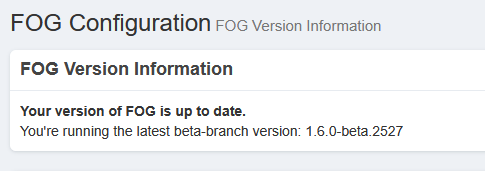
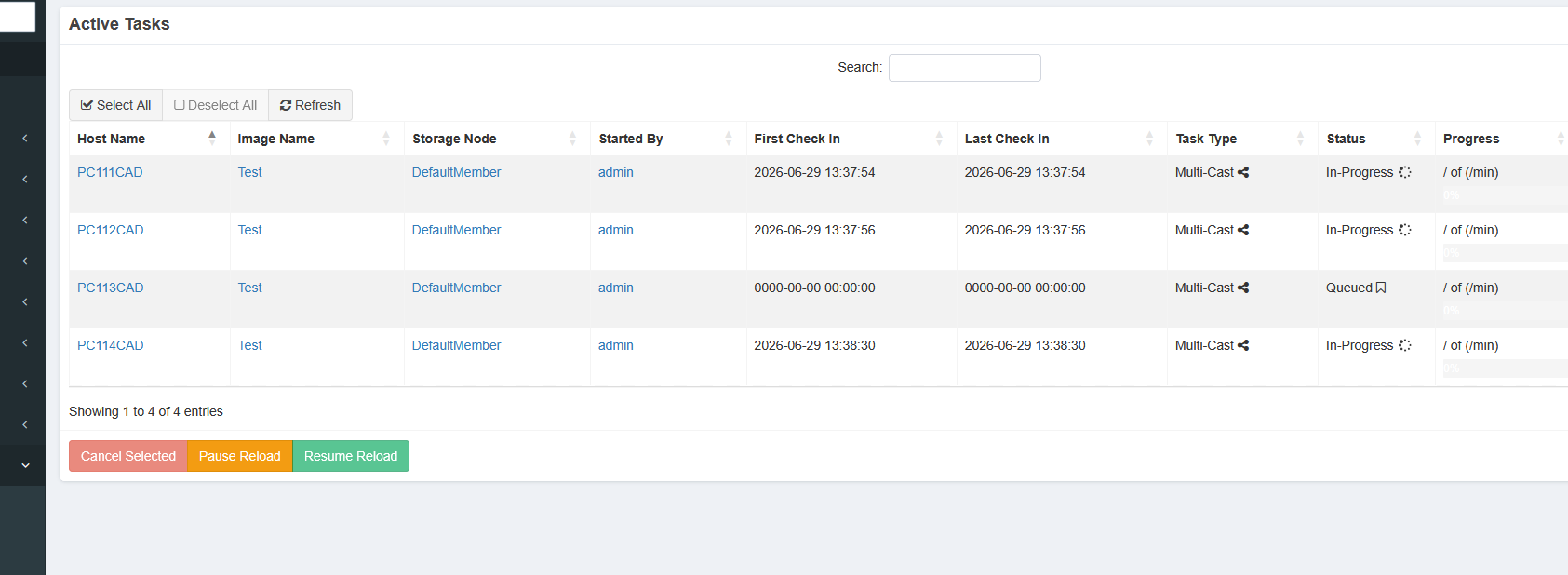
Windows 11 | 65x HP Z2 Tower G1i | UPDATE -
-
@kratkale If you update the the latest verison of working-1.6, does this error go away?
-
@Tom-Elliott
This bar is missing in multicast Task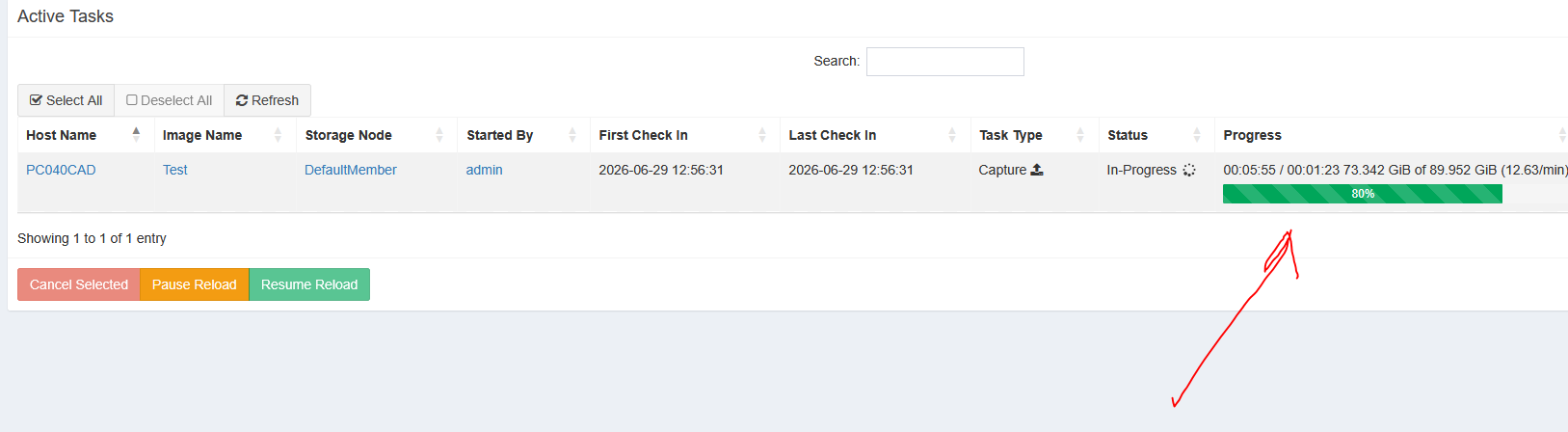
-
@Tom-Elliott
it works the single Cast with PC115CAD - it was tho old 0O problem thanks
No errors with database and so on - like it was in multicast - reported …
fog client will now be installed after cloning - first try -
I’m using a simulation but I’m still seeing percent for mutlicast tasks.
-
Now there is the bar …
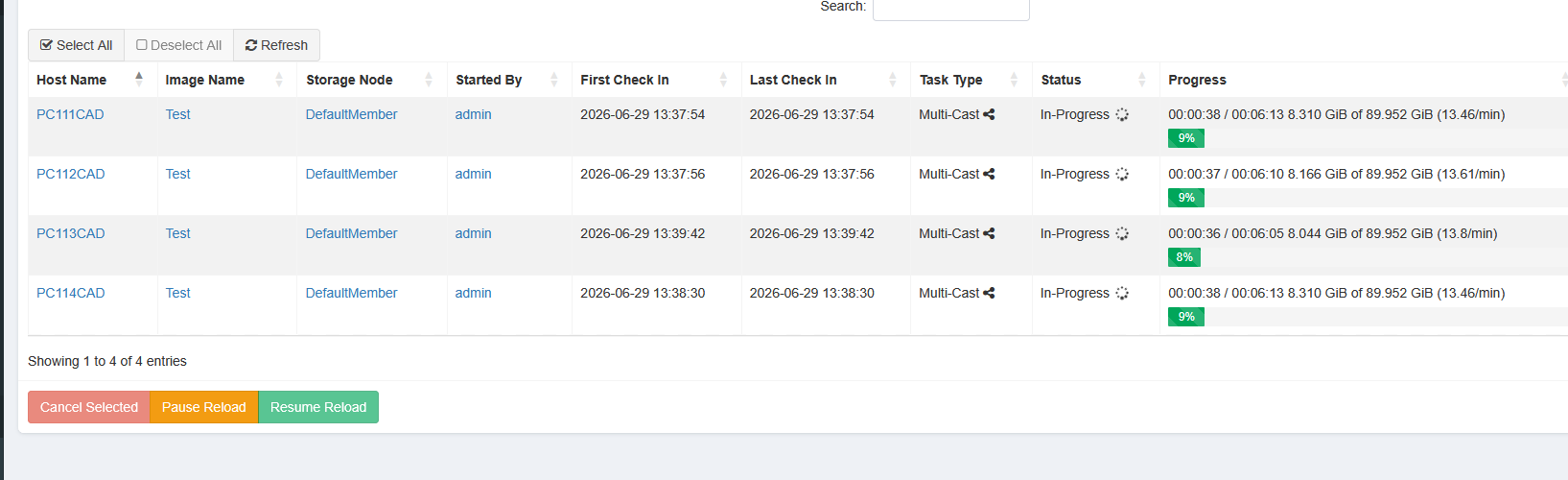
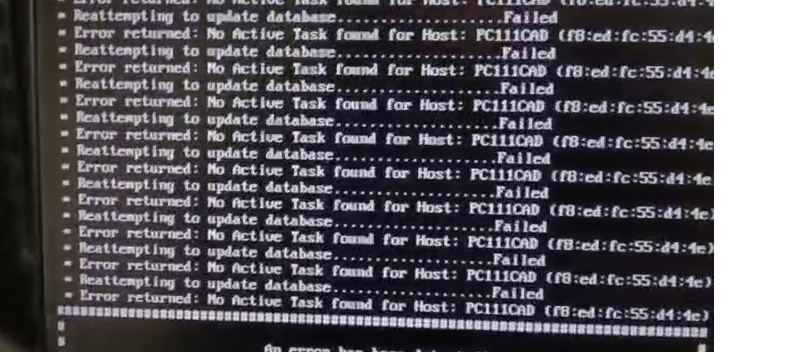
Error after multicast session:
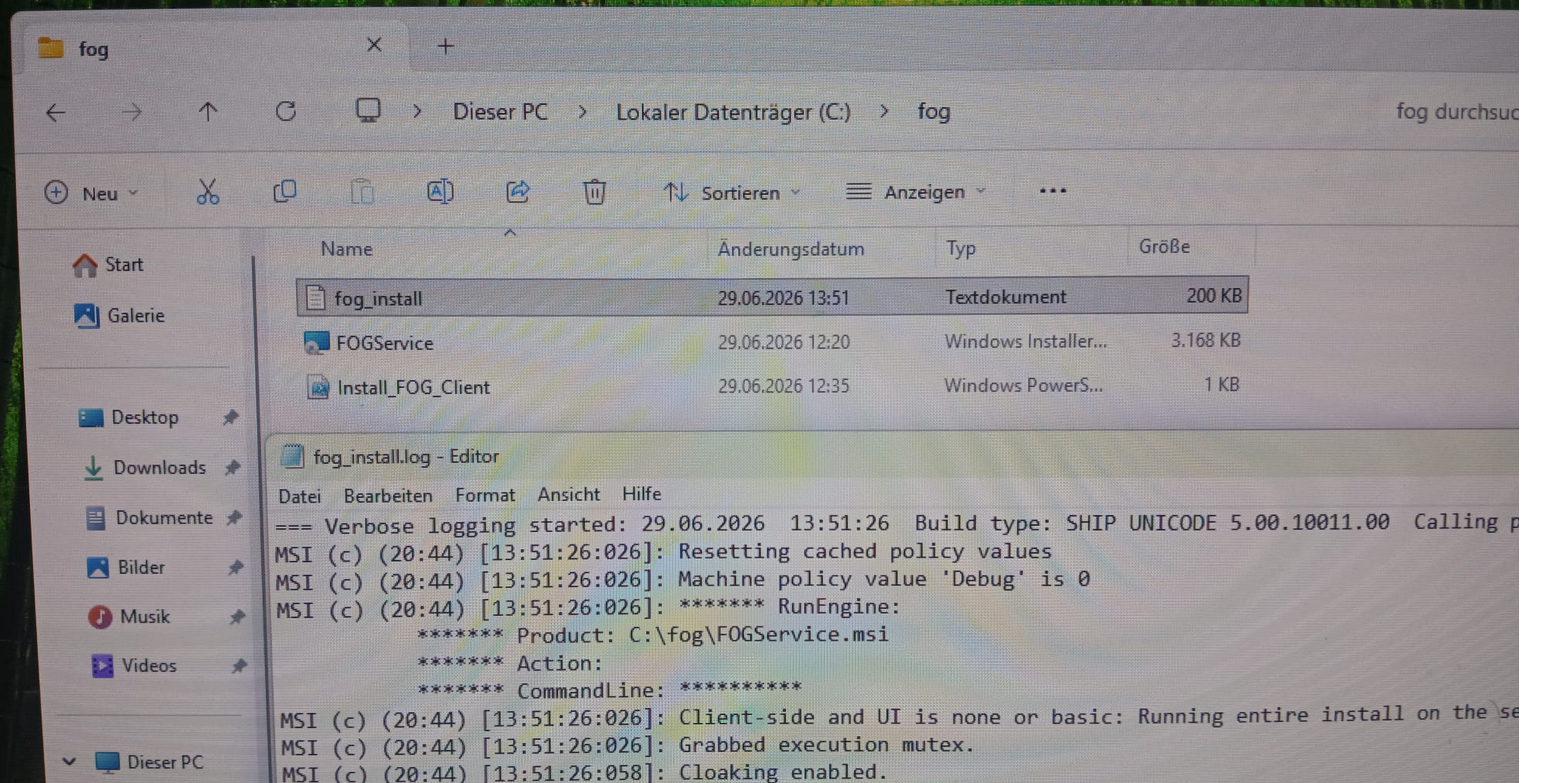
Installation of fog client worked
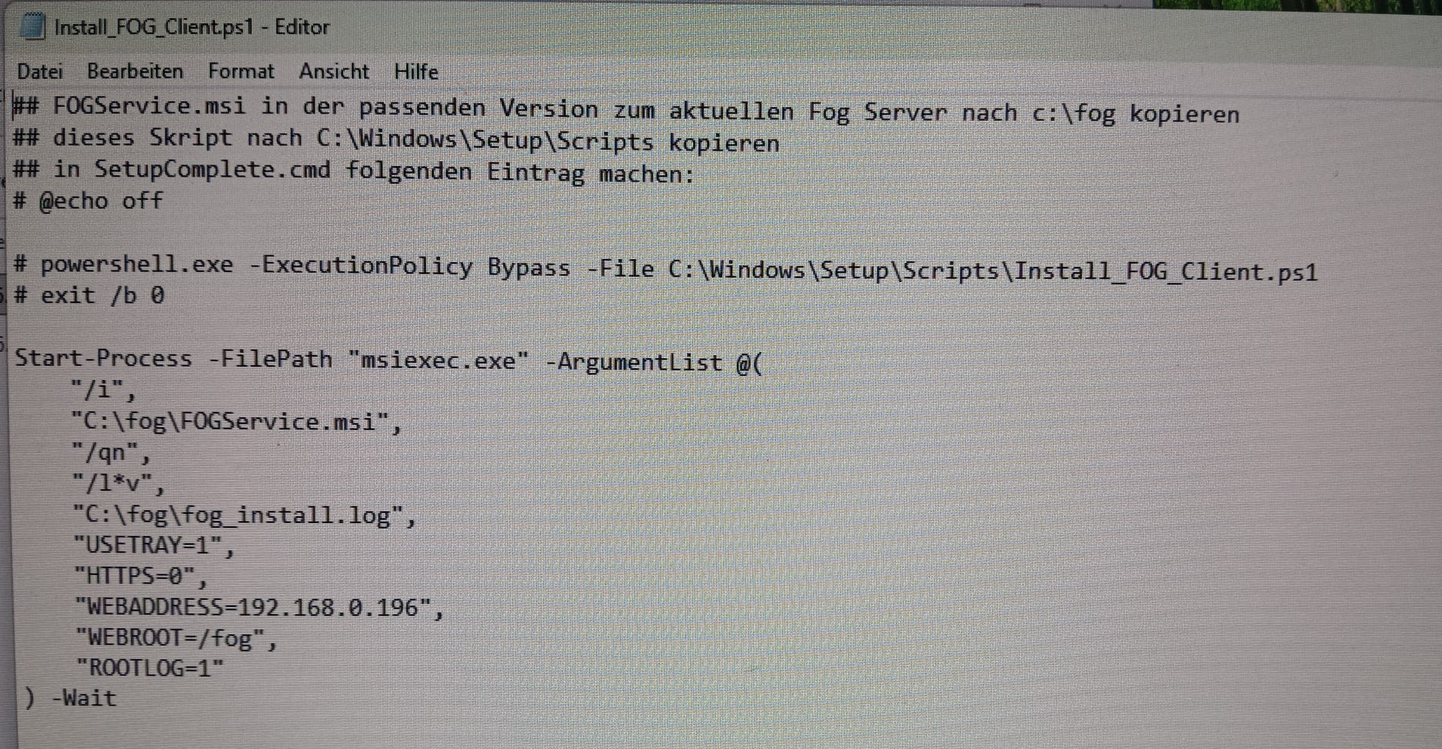
Here the used script:
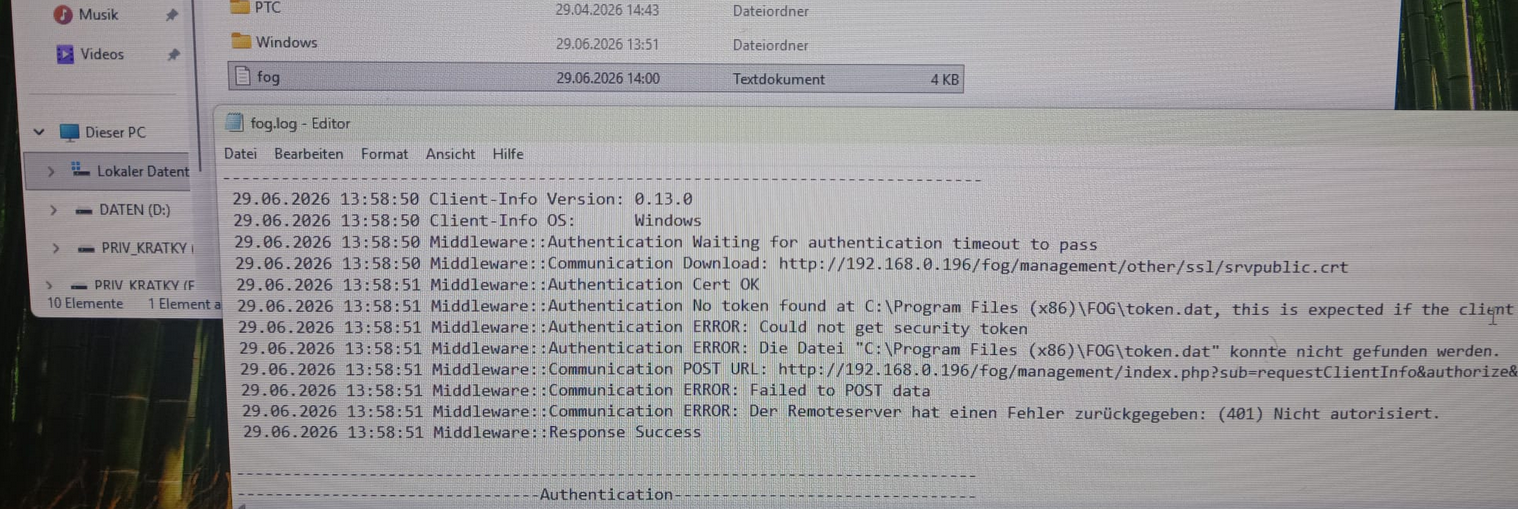
Still Problem with security token
Reset Encryption Data for PC111CAD
workingTomorrow I’ll reset Encryption Data during the cloning process …
-
@kratkale So, just to make sure:
Things are working (though you are getting a visual error saying something failed when it really didn’t?)
Otherwise things are functioning mostly correctly now, right?
-
@kratkale Also just pushed code I hope should address the issue with Multicast Task race condition which I think is the problem you’re seeing.
Basically when the multicast task starts to clear out it updates the reliant tasks to complete, but it’s doing this before your machine gets to do it’s checkout process which makes it show as “complete” but then when it tries to clear itself out, it’s already clear causing it to say there is no task available to complete causing the message you’re seeing.
I’ve added code to hopefully get around that if you’re willing to test?
Also the latest working-1.6 has the Sun/Moon now and you can have dark mode (if you’re one - like me - who doesn’t want burned cornea’s
 )
) -
@Tom-Elliott
Yes—I can use the system again now. -
@Tom-Elliott
I do a update …

I take the url an copy it to my browser
The url changes automatic and I get this:
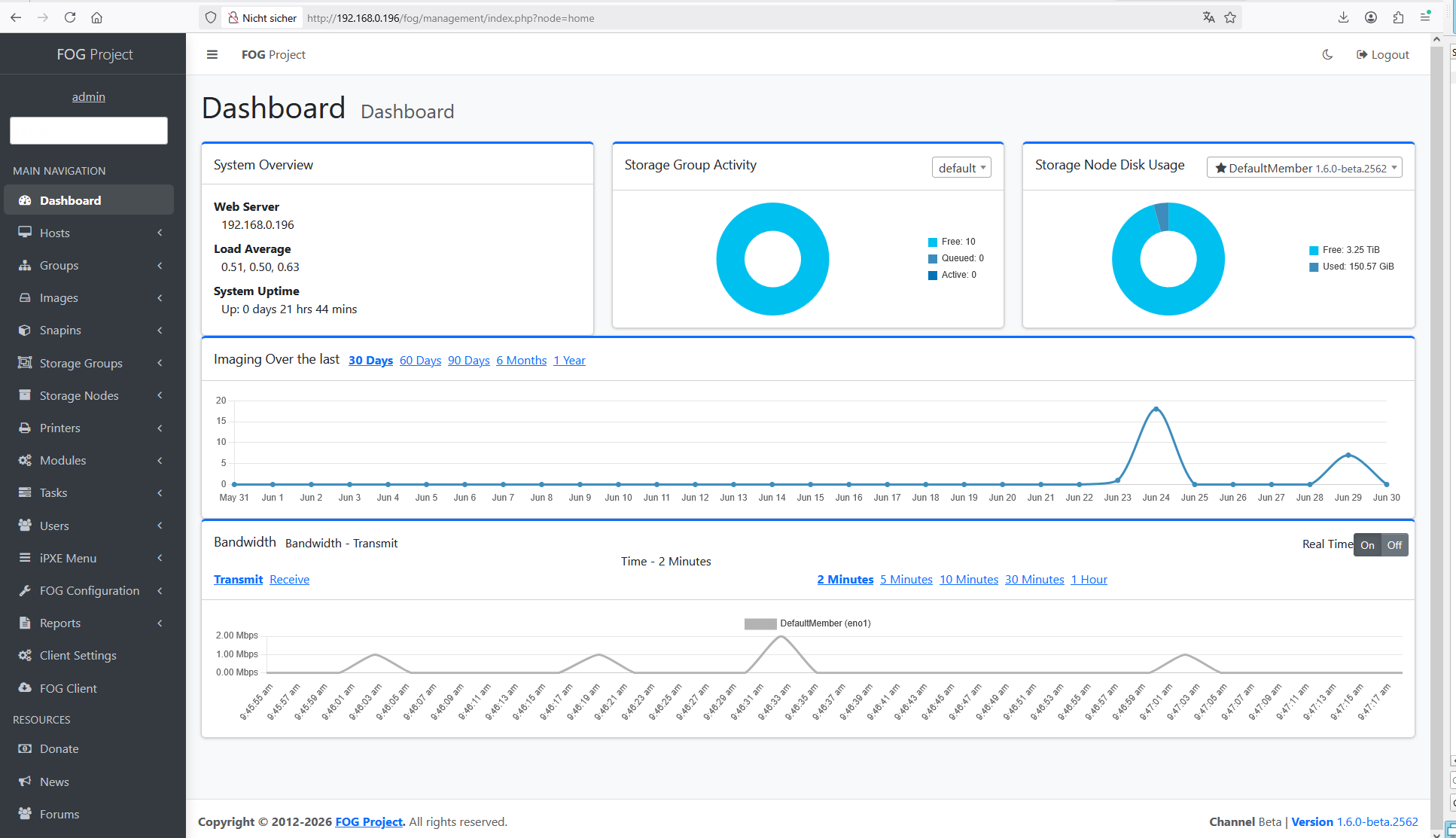
What is the sense of this ???
-
@kratkale what do you mean? The ui refactor is intentional. This is just progressing to make it more inline.
-
@Tom-Elliott
I mean, why do I need to connect to the web interface? I don’t have to do anything there during the update, do I? -
@Tom-Elliott
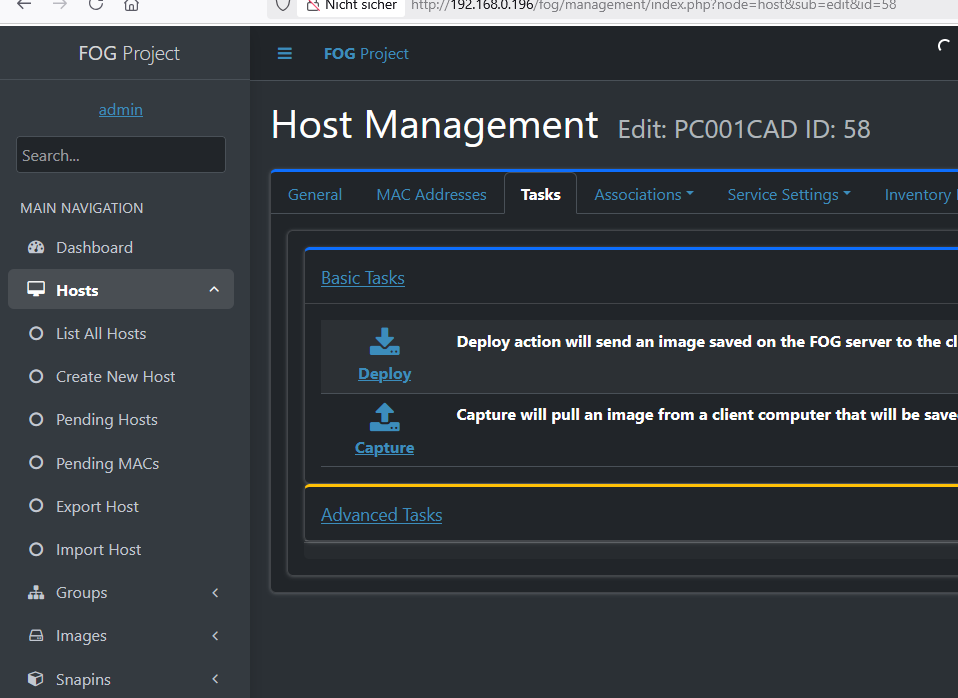
In my workflow, it would be really cool if I could assign a single snap-in directly from the Basic Tasks…
-
@kratkale You can, but it falls under “Advanced Tasks”.
-
@Tom-Elliott
Yeah, that’s how I do it—but it always takes so many clicks—I think it would be great as a basic feature. -
@kratkale The problem is Snapins are not a basic feature:
They require the FOG Client + knowledge of what a snapin is and does (at a base level)
The “basic” for FOG is imaging at its core.
Snapins are a way of getting the machine to do additional things: install software, run a script (or set of scripts) etc… - Please note I’m not saying it’s not a useful feature, just saying that it’s more than a “Basic” thing.
You can do a curl request to schedule a snapin task which might be better, though you would need to know what MAC Address to use for the host in question.
-
@kratkale said in Windows 11 | 65x HP Z2 Tower G1i | UPDATE -:
I mean, why do I need to connect to the web interface? I don’t have to do anything there during the update, do I?
The URL you see is because the installer doesn’t know if (or not) there’s a Schema Update.
It always shows that on every install. If you don’t want to see that, now that FOG is installed, you can just run your installer with:
sudo ./installfog.sh -yIf there is a schema update, this will do the update for you automatically, if not, the doesn’t matter, the main update just goes through the normal process.
-
@Tom-Elliott
Automatic snap-ins (connected to the group or the PC) don’t always work well, e.g., when the PC is busy with itself and the Microsoft ecosystem after cloning. For example: the PC isn’t ready for the snap-in yet because it’s currently installing an update, isn’t in the domain yet, etc.
That’s why, over the years, I’ve gotten into the habit of first checking whether the PC is in the domain, letting it boot up completely, and only then running my “one” snap-in per PC. In that single Snap-in, I gather everything I need to set up the PC: for example, a student PC needs a Veyon client, the student proxy server, etc. => Student Snap-in; a teacher PC needs the Veyon Master and the fast teacher proxy => a separate Snap-in for teacher PCs -
@Tom-Elliott
I think sorting by name would be better than sorting by ID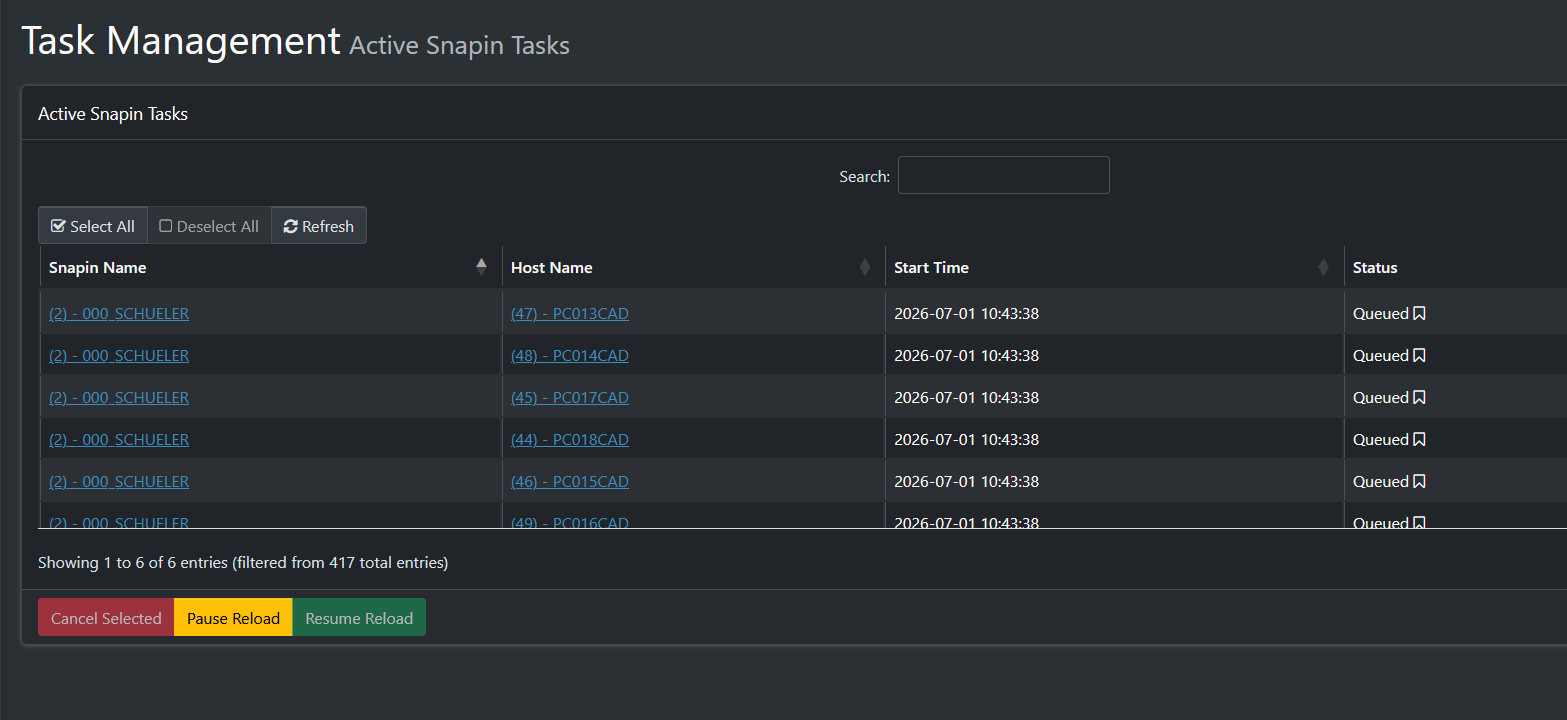
-
@kratkale I’m having it do a sort on “name” then by start time (newest first) if there’s a tie.
I think it is because the snapinLink is what you see as the name, and that link built by sorting by the IDs rather than the names.
For the active tasks table I figured sorting by the time adds a level of understanding so you always know who was the newest one to the party (so to speak).
-
@kratkale This has now been pushed.